
German passive voice: structure, usage and professional context
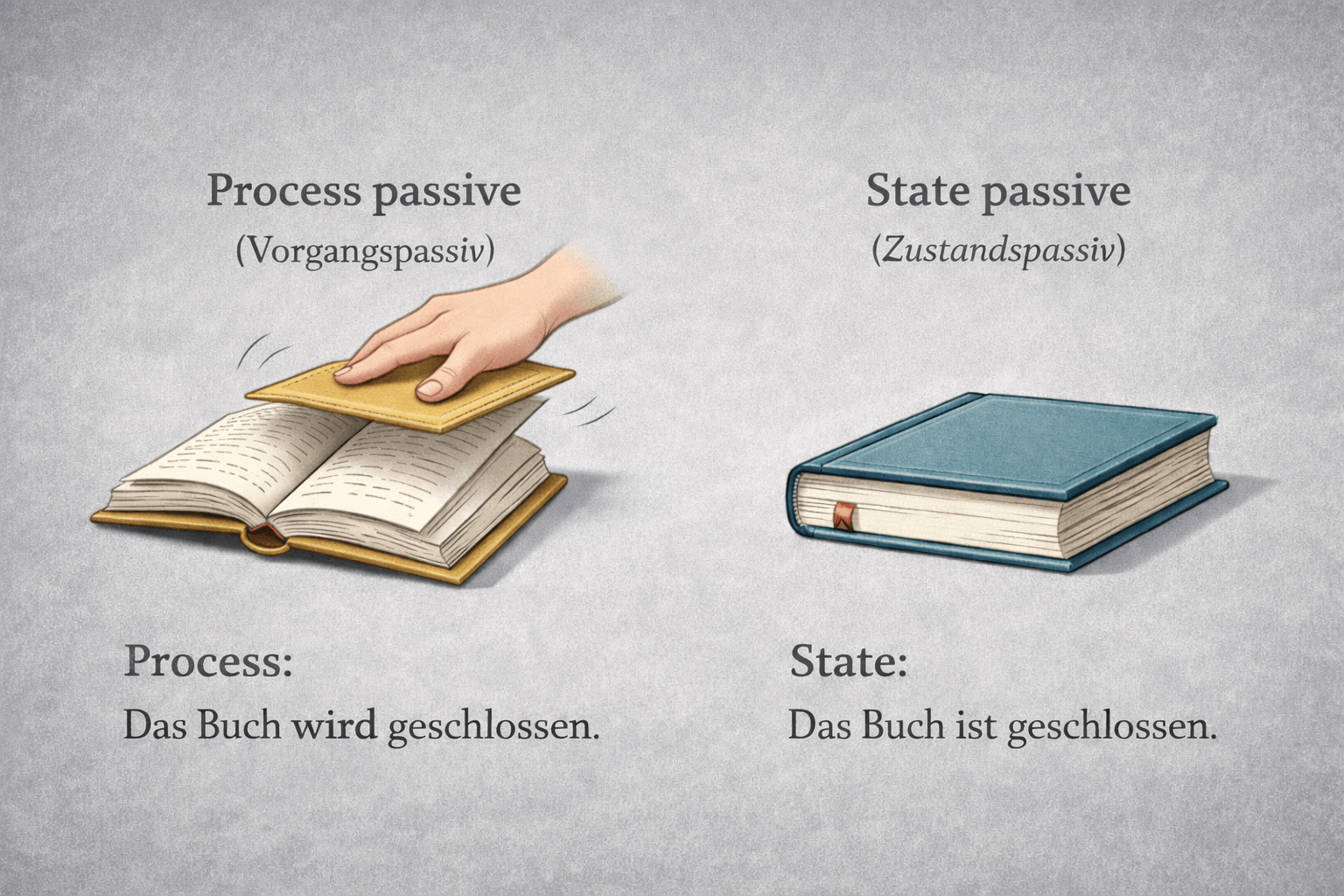
The German passive is common in reports, contracts and formal emails. Forming it is simple. Choosing the right auxiliary is where English speakers slip.
What the passive does
The passive moves the focus from the person acting to the action itself. It suits writing where the actor is unknown, obvious or unimportant.
How the German passive is formed
German forms the passive with werden and the past participle. The object of the active sentence becomes the subject:
Jemand schreibt den Bericht. (Someone is writing the report.)
Der Bericht wird geschrieben. (The report is being written.)
The passive in different tenses
Present: Der Vertrag wird unterschrieben. (The contract is being signed.)
Simple past: Der Vertrag wurde unterschrieben. (The contract was signed.)
Perfect: Der Vertrag ist unterschrieben worden. (The contract has been signed.)
In the passive perfect, werden becomes worden, not geworden. Geworden belongs to werden as a full verb: Sie ist Partnerin geworden. In written German the simple past passive is more common than the perfect.
Passive voice with modal verbs
Modal verb + past participle + werden: Der Bericht muss überarbeitet werden. (The report must be revised.) Das Problem kann gelöst werden. (The problem can be solved.)
Naming the actor: von or durch
Von introduces the person or organisation acting; durch introduces the means or cause: Der Vertrag wurde von der Geschäftsführung unterschrieben. Die Lieferung wurde durch den Streik verzögert.
The state passive: wird or ist?
Die Tür wird geschlossen describes the action: the door is being closed. Die Tür ist geschlossen describes the result: the door is closed. English uses is for both, and learners often pick the wrong German verb. Ask whether you mean the action or the result:
Das Angebot wird morgen verschickt. (The offer will be sent tomorrow.)
Das Angebot ist schon verschickt. (The offer has already gone.)
Passive or active?
The passive keeps a text neutral: Die Unterlagen werden geprüft. The active shows who is responsible: Wir prüfen die Unterlagen. In emails to clients, the active often reads clearer and more committed. Man offers a third option: Man prüft die Unterlagen.
For reports, emails and formal communication, private German lessons focus on the writing you do at work.